Fraud and financial criminal offenses seldom include flashing lights or a late‑night apprehension at a traffic stop. More frequently, a private investigator calls, a target letter gets here, or a knock at the door precedes a worked out surrender. Yet the risks are high, sometimes greater than in violent cases, since the quantities moot can be big, the proof long, and the possible sentence driven by loss figures and variety of victims. When a case relocates from investigation to bill, the concern comes to be prompt: just how to secure release pending test. That is where bail decisions and, in some jurisdictions, making use of bail bonds enter into play.
Over the years, I have actually strolled executives, bookkeepers, creators, and even first‑time culprits without any previous record via the swirl of pretrial release for white‑collar accusations. The mechanics look simple on paper. In technique, they reward early preparation, candor, and an understanding of exactly how judges think about danger in monetary cases.
What courts look for in economic criminal offense cases
"Danger" defines bail. Juries focus on two: danger of trip and threat of threat to the community. Fraudulence accuseds hardly ever provide a physical threat, which helps, but danger is broader than physical violence. A judge might check out the alleged capability to move money, falsify documents, or manipulate counterparties as a threat of ongoing economic damage. Where a fierce instance may rest on witness safety, a safeties fraud situation could turn on whether the accused can access trading systems or financier funds.
Flight danger analysis is concrete. An accused dealing with a ten‑year optimum with a consultatory guideline variety suggesting numerous years https://waylonefjm101.timeforchangecounselling.com/bail-bonds-for-theft-and-building-criminal-activities captive has stronger incentives to take off than a person encountering probation. Juries weigh connections to the district, family responsibilities, visa condition, worldwide traveling, ownership of foreign assets, and prior compliance with government procedures. In one financial institution scams situation I managed, the court required the surrender of a key and proof that a partner's family home abroad had no lienable link to the offender before accepting release.
Loss estimations issue. In both federal and several state systems, the supposed loss quantity influences both the fee and possible sentence. When loss climbs up previous seven figures, judicial suspicion grows. Add multiple sufferers, use of shell entities, or accusations of blockage, and you ought to expect tighter conditions.
How bail bonds fit into the picture
Bail bonds are a monetary guarantee. A court sets an amount to protect appearance and compliance, and a licensed bail bondsman messages a bond for a charge, typically a nonrefundable 8 to 15 percent of the face amount depending upon the territory and the accused's profile. For numerous economic criminal activity offenders, the numbers can be eye‑opening. A $500,000 bond, usual in mid‑level service fraudulence issues, might need a $50,000 premium plus collateral such as realty equity or a cash money deposit.
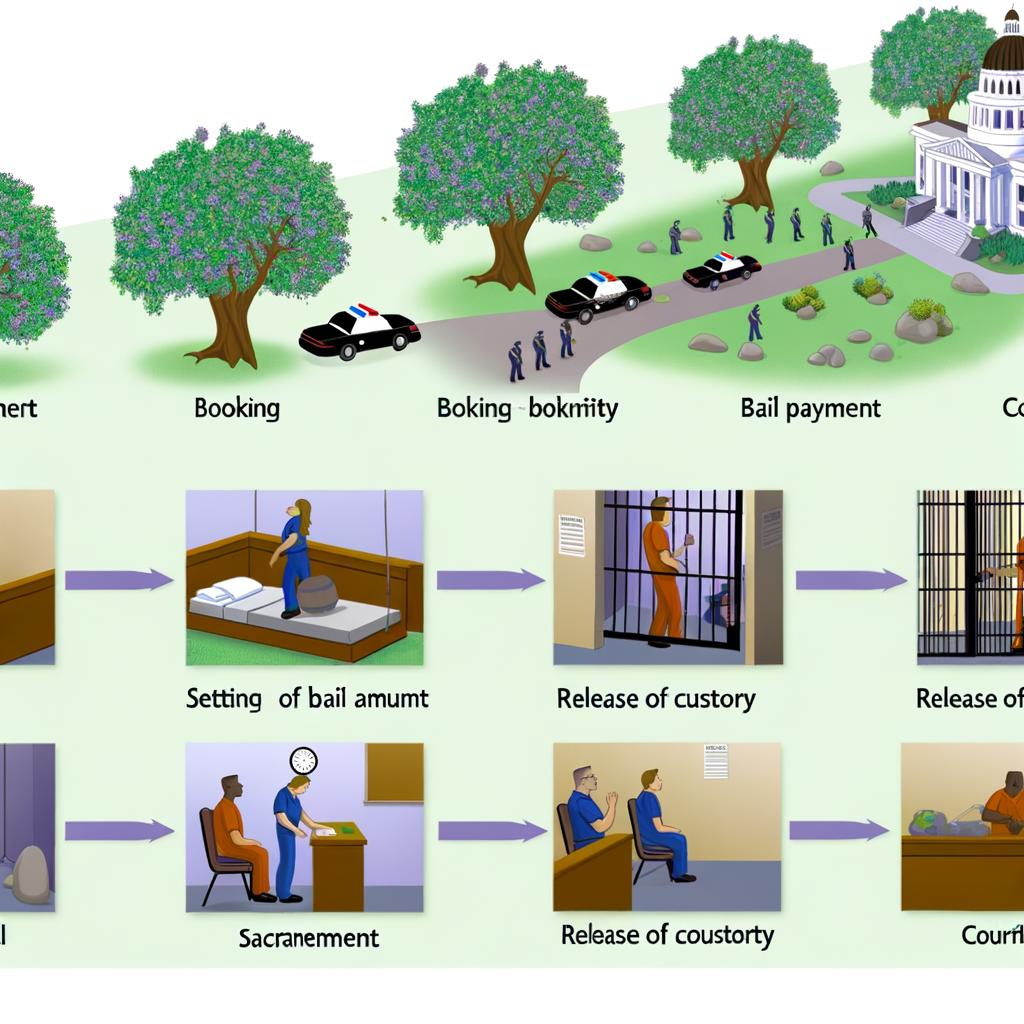
Unlike in cash bail situations, the bondsman presumes the threat of forfeit if the defendant fails to show up. That suggests underwriters scrutinize defendants the way lending institutions do: credit score, work, community ties, and security. In complicated scams issues, the underwriter may ask for business documents, bank declarations, or letters from advise validating the nature of the instance and the expected conditions. I have seen underwriters decline an application where the just supplied collateral was supply in a very closely held company intertwined with the claims, a sensible decision given the prospective taint.
In some territories, judges choose secured bonds over guaranty bonds for white‑collar instances. A secured bond affixes to concrete security posted directly with the court. Juries like the clarity: if an accused absconds, the court can sell off the collateral without including a third party. The trade‑off is larger up‑front obligations for the offender and family.
The federal spin: the Bail Reform Act and financial conditions
In federal court, the Bail Reform Act controls launch choices. The language varies from state bond schedules and is extra holistic. The court can get launch on individual recognizance, on an unsafe bond, or with problems varying from home detention to third‑party custodian guidance. Money can be part of the plan, but federal courts usually like problems customized to the alleged conduct.
A typical federal fraud instance may entail a $100,000 unprotected bond co‑signed by two financially accountable grownups, surrender of keys, travel restricted to specific areas, and a prohibition on taking part in fiduciary roles or calling victims and co‑defendants. In some cases the court orders no use devices or accounts connected to the conduct, though courts avoid problems that function as de facto punishment. If the charge is public and the case entails a signed up broker, anticipate restrictions on trading in behalf of others.
In a multi‑defendant wire fraudulence situation I worked, the magistrate judge imposed a time limit, ankle joint monitoring, and a ban on access to the business's cloud drives. The defense negotiated a carve‑out enabling access to particular folders under guidance so the customer can prepare his case. That type of nuance matters, due to the fact that overbroad problems can hamstring muscle a defense, while narrowly tailored terms can make sure both compliance and fair preparation.
Collateral, co‑signers, and the politics of requesting help
Once a court establishes bail, interest turns to collateral. Bondsmen and courts want properties that can be valued and, if needed, liquidated. Money is simplest. Property prevails yet takes time to finance, especially if there are mortgages, liens, or joint owners. Vehicles diminish and typically aren't enough. Securities accounts can work, but if the supposed fraud touches those funds, courts and underwriters will balk.
Co signers are more than names on paper. An excellent co‑signer recognizes the responsibility and accepts the threat that if the offender stops working to show up, the court can seek their assets. Judges may ask co‑signers concerns at a hearing to confirm understanding. I recommend customers to pick co‑signers that are financially stable and have an uncomplicated monetary account. A family member who runs a small company with commingled accounts might struggle to produce clean financial institution declarations, which can postpone approval.
Here is a list that typically guides early discussions regarding collateral and co‑signers:
- Identify liquid assets that are not knotted with the claimed conduct, such as personal savings or retirement accounts that allow pledges. Pre gather building files, consisting of acts, recent evaluations, and home loan declarations for any kind of realty offered. Choose co‑signers who can reveal constant income, reduced debt, and clean credit, and that recognize the lawful threat of signing. Keep the security package traditional, using assets that you can live without accessibility to during the case. Avoid pledging company assets tied to the examination, even if they appear available.
Timing techniques: surrender, pre‑arranged bond, and first appearances
In scams instances, guidance commonly organizes a voluntary surrender. That solitary decision establishes the tone. Turning up early, clothed suitably, with a prepared bond package signals compliance. If the court sees a defendant that has actually currently given up a passport, pre‑cleared co‑signers, and completed financial disclosures, launch ends up being less contentious.
Pre organizing bail in state court can save hours or days. In some areas, a bail bondsman can establish approval based upon the anticipated bail quantity, pending the judge's signature. In others, you can not process anything till the docketed bond is validated. A skilled legal representative will understand which is which and can advise whether to launch underwriting ahead of time. The expense of a refundable down payment on underwriting is marginal compared to a weekend break in custody because security confirmation fell through at 4 p.m. on a Friday.
First looks bring threat. Prosecutors sometimes seek detention based upon risk to the area in situations involving ongoing systems or feasible witness tampering. Defense counsel must arrive with a plan clarifying just how conditions will certainly avoid any kind of recurring damage. In an embezzlement instance at a nonprofit, we proposed a no‑employment condition in any fiduciary role, backed by a letter from the present company confirming suspension without access to funds. The court adopted the proposal and launched the customer on an unprotected bond.
Unique creases in economic allegations
Fraud and monetary crime groups cover a wide spectrum: credit card fraudulence, bank fraudulence, insurance policy fraudulence, payroll tax infractions, securities and assets fraudulence, public corruption, and extra. Each lugs unique threats that can influence bond conditions.

Wire and bank fraudulence usually involve alleged use of interstate interactions or banks, which places them in government court. These instances typically include comprehensive electronic proof, and courts might impose tool or account limitations. In bank card skimming issues, courts might prohibit property of card‑reading devices, also for legit service purposes, at the very least until the defense clarifies the context.
Tax cases present a various dynamic. Prosecutors lean on proof of willfulness. The court may concentrate less on loss in isolation and even more on patterns of conduct. A defendant with a history of non‑filing or neglecting IRS communication may face stricter problems than somebody that filed however is accused of incorrect statements. Release can depend upon promises to bring filings current or to involve a CPA under a Kovel setup so privileged work can start promptly.
Securities fraudulence cases bring investor relations right into the court room. Juries look hard at whether the accused has access to financier money, can raise capital, or may proceed marketing the very financial investment moot. Problems might limit fundraising, require elimination from administration positions, or restriction call with capitalists outdoors advise's visibility. Those problems can effectively shutter a start-up. That is a hard trade‑off, but it can be the distinction between pretrial release and detention.
Practical underwriting: exactly how bondsmen think about white‑collar cases
Bondsmen examine three points. First, the difficult mathematics: bond quantity versus security. Second, the individual: security, work, history. Third, the data: what the accusations recommend about the likelihood of compliance. White‑collar offenders frequently look solid on paper, however a large potential sentence and overseas ties can stress experts. If the customer invested a years working in Hong Kong and maintains accounts there, expect additional inquiries. Volunteer disclosure of those details, mounted with proof of deep local origins and a record of participation, helps.
Underwriters choose clean documents. A two‑page recap from counsel, stating charges, expected bond, and any known conditions, can accelerate authorization. If there is an expected $250,000 bond with 10 percent costs and collateral in the type of a main home with $400,000 in equity, claim so. Quality minimizes back‑and‑forth and stays clear of late‑stage surprises.
Finally, timing is money. If a bond is posted late in the day, the prison may not process launch until the next early morning. In large territories, weekend breaks make complex every little thing. If a customer turns themselves in Friday mid-day, presume an added 24 to 72 hours in custody unless documents is beautiful and the court's clerk's workplace is still open. I have stood in lobby areas enjoying the minute hand eat into a household's weekend break since an out‑of‑state deed needed a fresh certified copy. Tiny logistics make huge differences.

When courts reject cash bond and prefer non‑financial conditions
Some states have actually relocated far from cash bond, and in government court, money is not the default. Judges increasingly lean on non‑financial conditions that match the alleged conduct. Area monitoring, third‑party custodians, and monitored launch with pretrial services can guarantee a court without tying up family members properties. Defense attorney should suggest these choices proactively, especially where the offender can not put together collateral quickly.
For accuseds in monetary cases, non‑financial conditions usually include no accessibility to client funds, no employment in duties with signatory authority, and no call with co‑defendants other than through advise. In a purchase fraudulence issue, the court called for the client to utilize only a basic phone with no email capability for organization, which was unwieldy but workable. Over time, we sought to customize the problems as pretrial services recorded excellent compliance.
Violations, alterations, and the lengthy road to trial
Release does not finish the discussion. Compliance builds trust. Even minor offenses can set off a hearing. A missed check‑in or an international trip scheduled prior to apprehension but not revealed can bring about tightened up conditions or, in many cases, cancellation. I advise customers to over‑communicate with pretrial solutions and to document demands in writing. If life occasions require traveling, submit an activity with specifics: plan, purpose, who is paying, and proposed safeguards. Juries sometimes accept global traveling for funeral services or once‑in‑a‑lifetime occasions when the document shows exemplary compliance.
As situations advance, problems can be modified. If an offender sheds a job due to a no‑fiduciary‑duties problem, but later on protects a function with robust internal controls and no access to client funds, counsel can seek a customized amendment. Courts value updates sustained by employer letters and, when suitable, third‑party oversight such as regular records to pretrial services.
The honest stress: paying premiums and shielding the defense
Bail bond costs are nonrefundable, which produces a budgeting problem. In a fraudulence case, defense costs can match or surpass bond. For a family finding between a $75,000 premium on a $750,000 bond and preserving a forensic accountancy team, the allotment of sources ends up being tactical. Some accuseds select a safeguarded property bond to stay clear of the costs, accepting the management burden and the risk of binding home equity. Others approve a smaller, much more restrictive release that does not drain pipes the protection fund at the outset.
I encourage customers to map what the first 90 days of protection will cost: lawful costs, forensic audit, data hosting, private investigator hours. Then determine bond options against that. There is no global solution. A defendant who can live under home detention with work carve‑outs may conserve funds for the advantages. Another whose company needs traveling to keep the firm to life may require a larger bond and looser conditions to preserve livelihood. Courts are receptive when the protection clarifies source restrictions transparently and suggests realistic, safe conditions.
Insurance, indemnity, and the spillover from company roles
Executives in some cases presume a business or a supervisors and police officers insurance policy will certainly cover bond costs. That is unusual. Bond is typically omitted from D&O plans, and the majority of indemnification agreements stop short of moneying bond premiums. Also if a company wanted to aid, the optics in a supposed business fraudulence can be destructive. I have actually seen boards duke it out whether to progress protection costs when regulatory authorities are circling around. Expect analysis, and presume bond is an individual responsibility unless corporate counsel offers a clear, written green light based on policy language.
State differences that change the calculus
The same conduct can create radically different pretrial landscapes relying on the online forum. Some states still rely upon set up bail quantities for fraud‑type costs, which can speed up release but may oversimplify the danger profile. Various other states, adhering to reform efforts, lean greatly on judicial discernment and non‑financial problems, which puts more focus on the hearing presentation. In regions with big immigrant neighborhoods, judges can be careful if a defendant has twin citizenship and family abroad. Conversely, in country jurisdictions, a long‑time regional business person with deep origins might obtain a generous recognizance release also on a serious charge.
If there is any type of chance the instance will certainly go government, get ready for that possibility. Federal guidelines around home bonds, co‑signers, and pretrial services differ significantly from state method. I have seen clients publish a huge state bond only to be arrested on a federal problem and deal with a new launch decision. Coordinating with counsel across jurisdictions can avoid duplicative costs and aid structure problems that a federal court will certainly acknowledge as meaningful.
Preparing the human side
Courts are run by individuals, and individuals study hints. A defendant who gives up early, arrives with family support, submits tidy economic disclosures, and treats pretrial services professionally produces energy. Juries take notice of quiet information: an employer that shows up or creates a particular letter regarding tasks and supervision, a landlord going to verify residency, an instructor or priest that talks to character. None of this changes legal disagreements, however personality evidence assists structure why release is a secure bet.
There are likewise difficult discussions. If the claimed plan entailed your service companion, you can not call them to discuss old complaints. If you ran pay-roll, you might not tip foot in the bookkeeping software. If you handled capitalist communications, you may need to hand that role to another person totally. Accepting those lines early protects against accidental infractions that cast doubt on your judgment.
What a well‑structured bail bundle looks like
Think of a bail package as a plan. It must be concise, fact‑heavy, and very easy for a court to embrace. The most effective packages I have actually seen or developed usually include a brief memorandum from advice, a proposed order with particular conditions, and appendices that prove capacity to comply: evidence of home, employment letters, key surrender invoices, and security documentation. If recommending a third‑party custodian, include their affidavit and a quick statement of their understanding of the duty to report violations.
Another feature of strong plans is a realistic compliance strategy. If the defendant must prevent specific modern technology, define alternative tools. If business trips are off the table, discuss how the firm will certainly pass on responsibilities. These aren't cosmetic touches. They inform the court you have currently considered rubbing factors and solved them.
Managing expectations: the trip after release
Release recovers life somewhat, however it does not bring back normalcy. Expect random home sees by pretrial services, job interruptions, and social pressure. In a long, document‑heavy fraud situation, pretrial can stretch for a year or even more. That timeline is not an indication that any individual is dragging their feet. Discovery evaluation, motion technique, and plea conversations simply require time. Throughout that period, small, regular acts of compliance build a record that assists with future demands, from travel to sentence mitigation if the situation solves except trial.
Failure to appreciate this reality can be expensive. I when watched an accused, released on a large building bond, ask to loosen conditions within 2 weeks to participate in a golf trip. The request landed inadequately. Comparison that with an additional client who quietly abided for six months, then asked for consent to go to a youngster's out‑of‑state college graduation with accurate details and letters from pretrial and the school. The court provided it without a hearing.
Final idea: clarity and reliability carry the day
Bail end results in scams and financial criminal activity instances activate credibility. You gain that with transparent economic disclosures, clean security, thoroughly picked co‑signers, and conditions that match the conduct. Bail bonds are devices, not trophies. Occasionally the clever play is to make use of a surety to move quickly and get back to family and advise. Various other times, a residential property bond maintains cash money for the defense. In federal court, cash may be less central than a thoughtful collection of limitations that neutralize risk.
What never changes is the worth of preparation. If you straighten the narrative, the numbers, and the safeguards, judges discover. And when a court believes you will certainly appear, follow orders, and avoid additional harm, release comes to be the policy as opposed to the exemption. In financial instances where complexity can bewilder, that sort of regimented simplicity is a powerful advantage.
ABBA Bail Bonds 900 Avila St STE 101 Los Angeles, CA 90012 (213) 296-0901 https://abbabailbonds.com